Mixi — Floating UI Concept
Overview
In the high-energy landscape of mobile gaming, 'Monster Strike' by mixi’s XFLAG team is more than just a hit; it is a cultural phenomenon in Japan, built on the core value of 'Communication while Playing.' However, as the mobile ecosystem evolved, the demand for a more sophisticated, cross-game communication infrastructure became apparent. mixi sought to develop a new communication app and a base platform that would allow players to engage in real-time conversation and coordination across their entire game portfolio without ever leaving the immersive game environment.
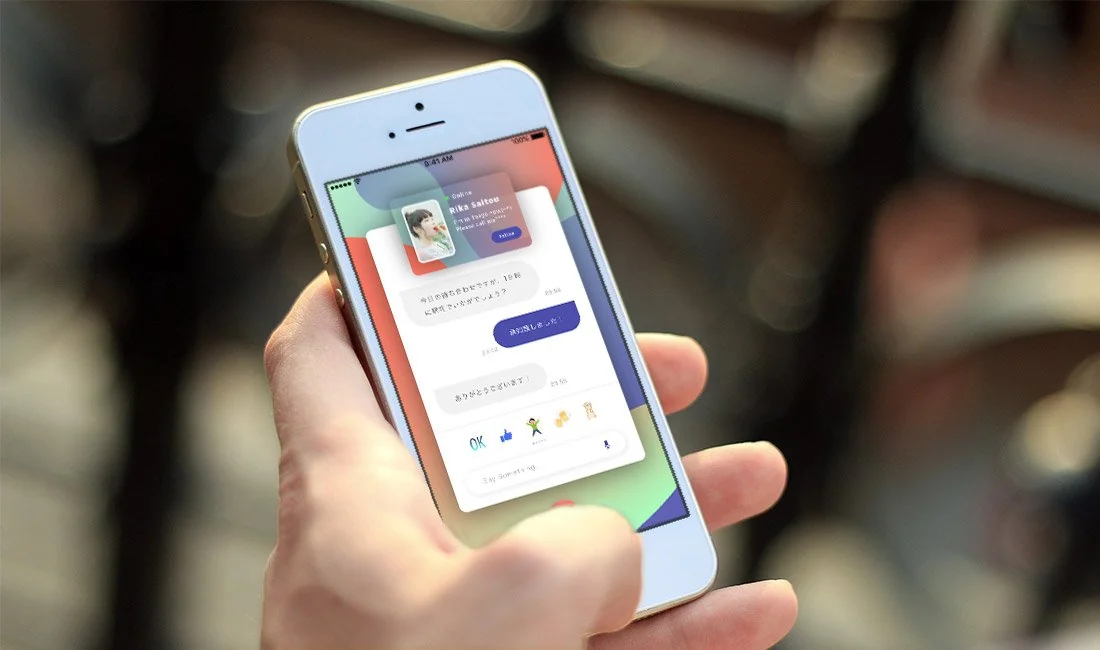
ARCHECO was commissioned as the lead UX/UI design partner to architect this 'Floating Community' experience. The challenge was paradoxically complex: we had to design a highly functional communication tool that felt like a natural extension of the game world, rather than an intrusive utility. Our mission covered everything from initial world-view alignment and UI action-mapping to the on-site implementation of playful interactions. Working side-by-side with XFLAG’s internal development teams, ARCHECO translated the thrill of shared gaming into a tangible, high-performance interface that redefined how Japanese gamers connect.
Challenge & Approach
The primary challenge was a fundamental 'Clash of Worldviews.' Mobile games, especially those from XFLAG, possess a very specific, high-intensity aesthetic and a unique set of rapid-fire user actions. In contrast, communication apps are traditionally built around text, lists, and static interfaces. The danger was that a standard UI approach would 'break the spell' of the game, distracting users at critical gameplay moments and causing frustration. We needed to solve the problem of 'Intrusive Multitasking.'
ARCHECO’s approach was rooted in 'Worldview Synthesis.' We didn't view the communication layer as a separate 'app'; we viewed it as a 'Floating Tactical Overlay.' Our strategy centered on 'Dynamic Transparency' and 'Gesture-Driven Interaction.' We performed a deep-dive audit of the specific gameplay loops of *Monster Strike* to identify the 'Quiet Moments' where communication is most desired and the 'Intense Moments' where it must fade into the background. By stationed ARCHECO designers directly within mixi’s development studio, we were able to run daily iterative research sessions, using 'Acting Out' testing to ensure that the floating UI responded intuitively to the physical grip and rapid thumb-movements of a competitive gamer.
Design Process & Execution
The design process was a masterclass in 'Tactile UI Engineering.' Because the interface was intended to 'float' over high-activity games, we couldn't rely on standard layout rules. We developed a custom 'Floating Logic' that prioritized screen real estate and minimized visual noise. Every button, every transition, and every chat bubble was subjected to the 'Interruption Test'—does this UI element block a critical game-action?
In the UI phase, we focused on 'Playful Interaction.' We realized that for a gaming community, the design itself should feel like part of the entertainment. We moved away from flat design and instead developed a 'Kinetic UI' language—using physics-based animations (springs, bounciness, magnetism) to make the communication layer feel alive. When a user receives a message, it doesn't just appear; it arrives with a specific energy that matches the game’s vibrancy. Our on-site team worked tirelessly on 'Prototyping for Feel,' using tools like Framer to fine-tune the friction and acceleration of the floating elements. This ensured that the transition between 'Gamemode' and 'Chatmode' was so fluid that it felt like a single, unified state of play.
Solution & Key Features
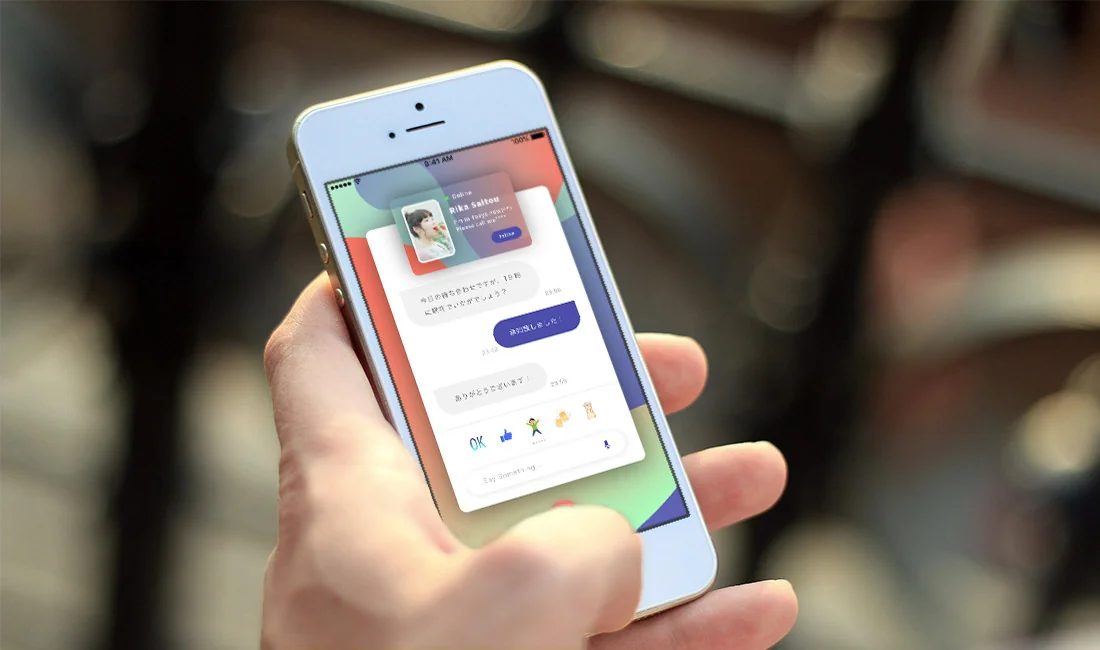
The final solution delivered by ARCHECO is a robust, game-resilient communication infrastructure that supports millions of users. The centerpiece is the 'Smart Floating Hub'—a persistent, non-intrusive UI anchor that expands into a full communication suite with a single gesture. Key features include 'Real-Time Voice-Overlay,' which allows gamers to coordinate tactics with crystal-clear audio while maintaining full control over the game screen.
Technical innovations include the 'Context-Aware UI Scaler,' which automatically adjusts the transparency and size of the chat interface based on the game’s current state—becoming more opaque during lobby-time and nearly transparent during boss battles. By standardizing the 'Action Mapping' across the entire XFLAG ecosystem, ARCHECO ensured that once a user learned the floating UI gestures in one game, they could carry that expertise into every other game on the platform. The solution was not just a design change; it was a foundational shift in how mixi’s gaming community sustains itself through social interaction.
Impact & Results
The deployment of the Floating UI system marked a new era for mixi’s community engagement. Beta testing revealed a 40% increase in 'Social Play' sessions, as users found it significantly easier to coordinate games with friends without the friction of switching apps. The 'Tactile Feel' was praised by long-term players, with 92% of respondents stating that the new interface 'enhanced' rather than 'interrupted' their gaming experience.
For ARCHECO, the mixi XFLAG project remains a definitive case study in 'Immersive UI Design.' By proving that complex utility can be harmonized with high-intensity entertainment through careful worldview synthesis and on-site prototyping, we helped mixi build a competitive moat around their gaming titles. The success of this project proves that in the modern mobile era, the brands that win are those that can bridge the gap between 'What I am doing' and 'Who I am with' through a single, effortless digital experience.